
SMART KITCHEN LAYOUTS FOR GRANNY FLATS
How to Make a Small Space Feel Easy to Live In
A granny flat kitchen has one job: to make everyday life feel simple.
Not “small but fine.” Not “we’ll make it work.” Simple.
Because in a compact home, the kitchen isn’t just where you cook. It’s where you make a coffee, unpack groceries, help a child with homework at the bench, or chat while dinner is on. When the kitchen layout is right, the whole granny flat feels bigger. When it’s wrong, you feel it every day.
Below is a practical guide to smart kitchen layouts for granny flats in NSW, with design strategies we use to help clients across Newcastle, Lake Macquarie, the Hunter Valley, the Central Coast and Port Stephens get a kitchen that feels open, efficient and comfortable.
As always, exact options depend on your floorplan, services location and overall design. Treat the following as general guidance.

Start with the “work triangle” (and keep it realistic)
In small kitchens, the classic “work triangle” still matters: sink, cooktop and fridge should be positioned so you can move between them without weaving around doors or squeezing past corners.
In a granny flat, the goal isn’t a perfect triangle on paper. It’s a practical flow: You can unload groceries without blocking the walkway; you can prep near the sink; you can cook without bumping into someone opening the fridge.
If you get that flow right, the kitchen will feel calm even when it’s busy.
1: Choose a layout that suits the footprint (not just what looks good)
There are a few kitchen layouts that consistently work well in granny flats. The best one depends on your room shape, where the plumbing can run, and how open-plan the living area is.
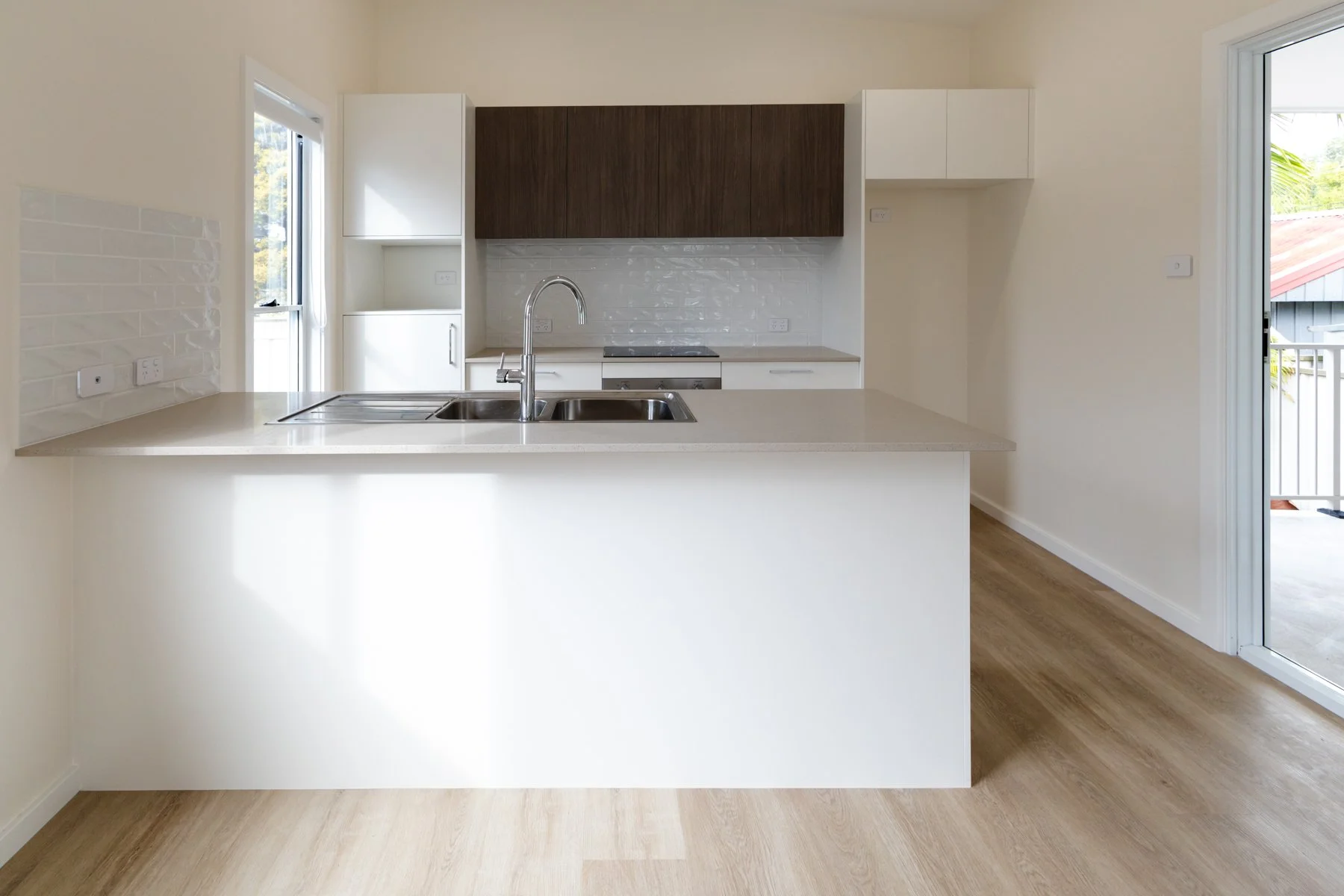
Galley Kitchen (two parallel runs)
A galley kitchen is one of the most efficient layouts for a narrow footprint (two parallel runs).
Why it works: Great bench space for the size, easy workflow (everything is close), works well when the kitchen is a corridor between the living and laundry/bathroom zones.
What to watch: Keep the aisle wide enough to move comfortably, and avoid putting the fridge where it blocks the main walkway.
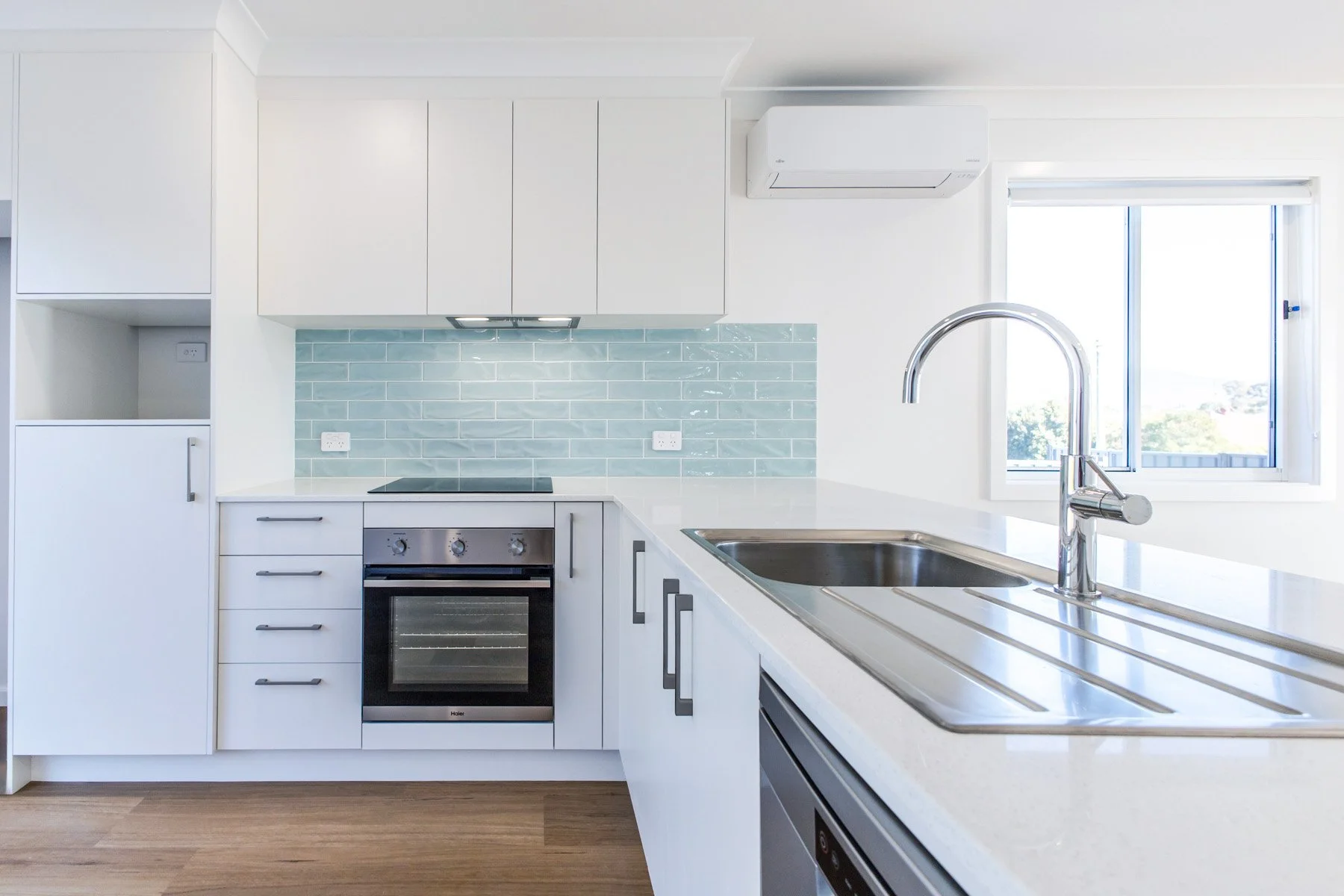
L-Shaped Kitchen
An L-shape is a strong option for open-plan granny flats.
Why it works: It creates a natural kitchen “zone” without closing the space in. It allows a clean run of cabinetry and a corner for extra storage and it can open up to the dining/living area for a more social feel.
What to watch: Corner cabinetry needs to be planned properly otherwise it becomes dead space.
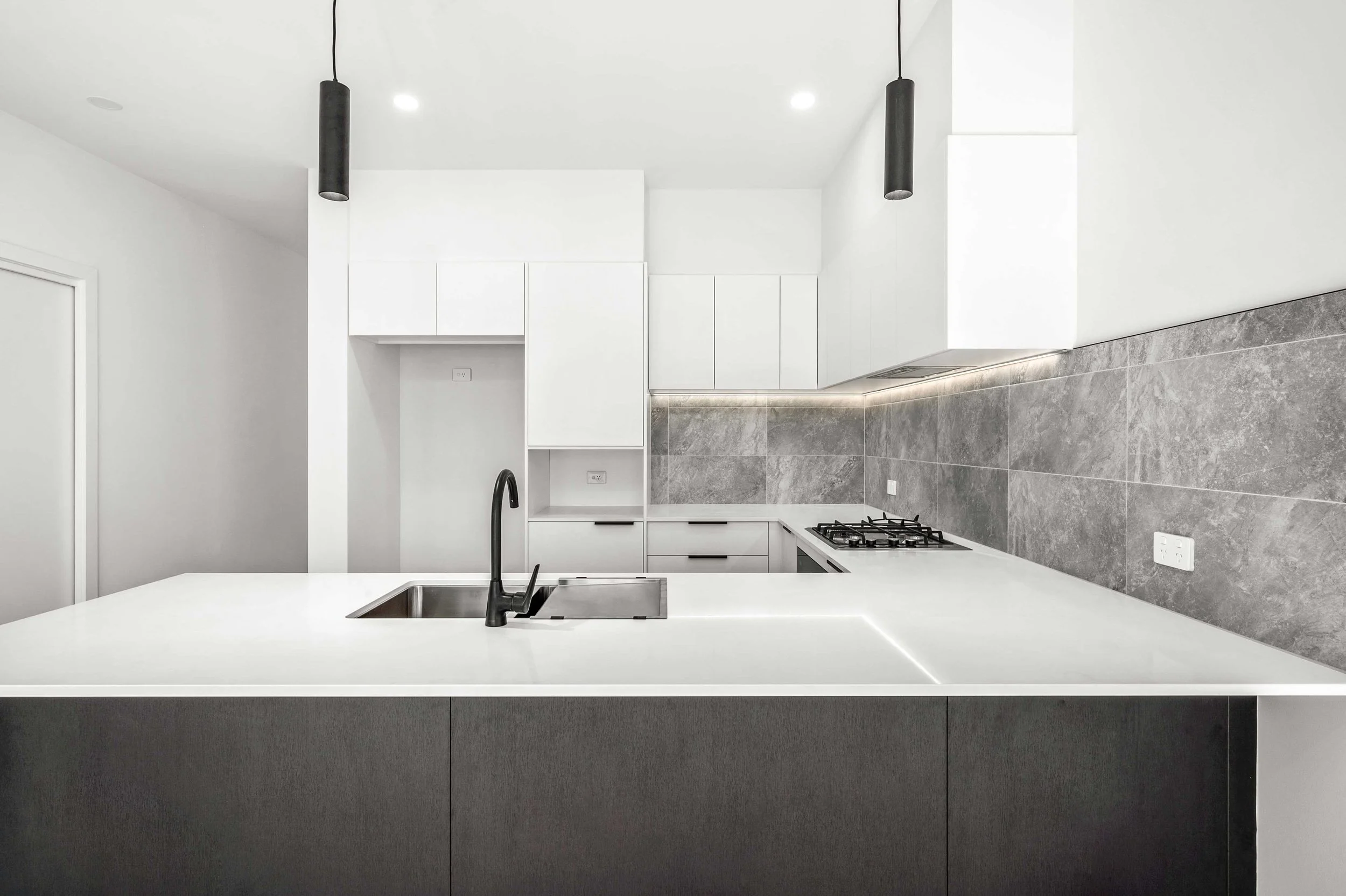
U-Shaped Kitchen
A U-shape can be excellent if you have enough width.
Why it works: Maximum bench and storage is great for people who cook often.
What to watch: In a small footprint, a U-shape can feel enclosed if the opening is too tight.
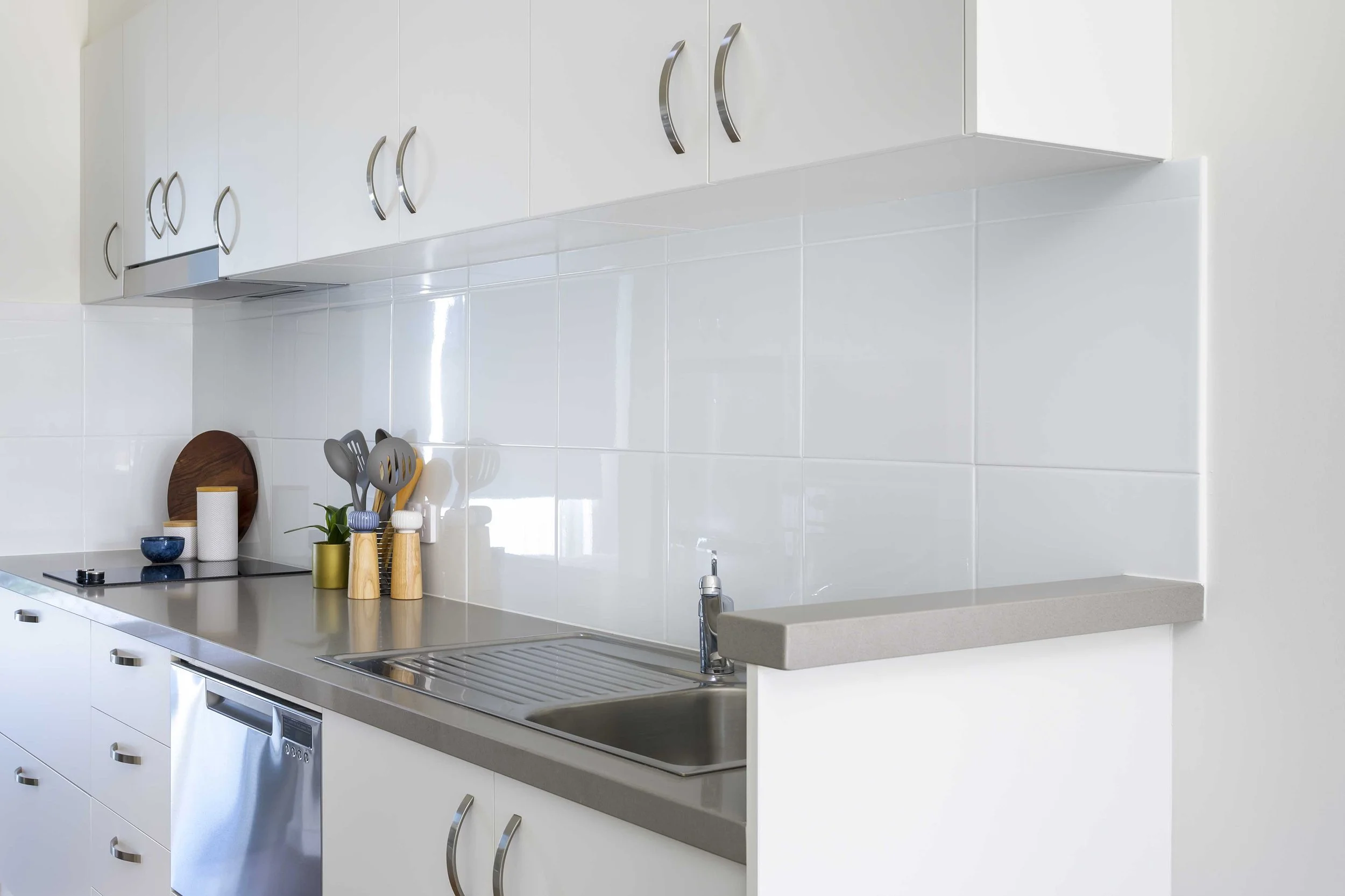
Single-Wall Kitchen
This is common in studios and very compact 1-bed designs.
Why it works: It keeps the space open and can look clean and modern.
What to watch: Bench space is limited, so you need smart storage and appliance choices.
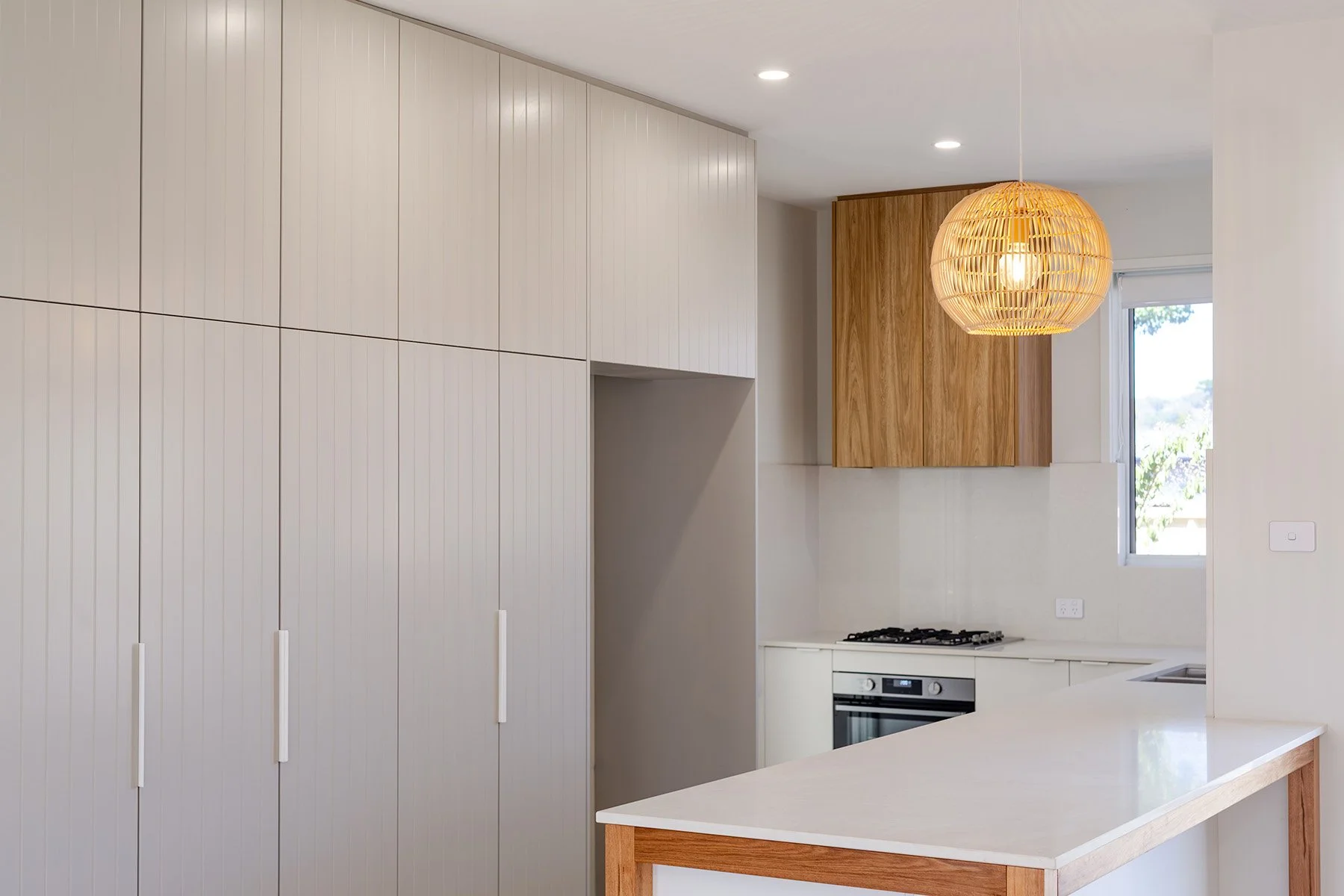
Peninsula/Breakfast Bar
A small peninsula can add prep space and create a natural dining spot.
But it only works if it doesn’t block circulation. In a granny flat, flow always wins.
2: Use vertical storage to keep the kitchen calm
In a compact home, clutter shows fast. Vertical storage is one of the simplest ways to make a kitchen feel bigger.
Smart options include: Overhead cupboards to full ceiling height, tall pantry cabinets (even a slim one can be a game-changer), pull-out pantry systems for narrow gaps, deep drawers instead of lower cupboards (easier access, better use of space).
A tidy kitchen isn’t about being minimal. It’s about having a place for everything.
3: Integrate appliances for a streamlined look (and choose the right sizes)
Built-in appliances help a small kitchen feel more cohesive. And in granny flats, choosing the right appliance sizes can free up valuable bench space.
Practical considerations: A 450mm dishwasher can be a great fit in a compact kitchen, apartment-sized fridges can work well for singles, couples, or short-stay family use; built-in microwaves can free up bench space and slimline rangehoods help keep sightlines open.
The goal is not “small for the sake of small.“ It’s “right-sized for how the home will be used.”
4: Light colours and lighting: the easiest “space multiplier”
Light finishes can make compact kitchens feel more open. Whites, soft greys and light timber tones tend to reflect natural light and reduce visual heaviness.
To avoid a kitchen feeling clinical, pair light cabinetry with: Warm lighting (especially under-cabinet lighting), a textured splashback or subtle contrast and matte finishes that hide fingerprints.
A granny flat should feel homely, not like a display home showroom.
5: Keep the layout practical for real life
This is the part many people miss. A kitchen can look great and still be annoying to use.
A few “real life” checks: Can you open the fridge and still walk past? Is there landing space next to the cooktop and sink? Where will the bin go? Is there a spot for a broom/vacuum? Can two people move through the kitchen without bumping elbows?
If you’re building for parents or future downsizing, also consider: Easy-to-reach storage (less bending and stretching), wider circulation where possible and lever handles and simple hardware.
The Malora approach: design the kitchen as part of the whole home
The best granny flat kitchens don’t feel like a separate “kitchen box.” They’re designed as part of the overall flow. The kitchen connects naturally to living and dining, the laundry placement doesn’t interrupt the kitchen zone and the bathroom location keeps plumbing runs efficient (where practical).
When these zones work together, the home feels bigger, easier, and more valuable.
Ready to plan a granny flat that feels genuinely liveable?
If you’re considering a granny flat in Newcastle, Lake Macquarie, the Hunter Valley, the Central Coast or Port Stephens, Malora Homes can help you plan a layout that suits your block and how you want to live (or rent).
Contact Malora Homes for an obligation-free chat and an indicative assessment.